Human & Animal Health

New Research: What Lets Nanoparticles Slip Past the Blood-Brain Barrier?

The blood-brain barrier (BBB) is one of the body's most selective gatekeepers, a dense wall of blood vessel cells, astrocytes, and pericytes that keeps most molecules, pathogens, and particles out of the brain. That's great news for brain health, but a big problem for trying to deliver drugs, and a growing concern for environmental scientists who report finding nanoplastics inside human brain tissue. Somehow, certain nanoparticles are getting through. The question is: which ones, and how?


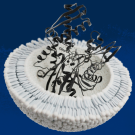
New Research: Building Extracellular Vesicles One Protein at a Time

Extracellular vesicles (EV) shuttle signals between cells, carry tumor biomarkers through the bloodstream, and are increasingly attractive as drug-delivery vehicles. But there's a pretty big catch: natural EVs are a heterogenous mess. Even a "pure" preparation from a single cell line contains dozens of subpopulations and hundreds of overlapping surface proteins, making it nearly impossible to say which protein does what. For a field trying to turn EVs into precision therapeutics, this is a huge problem.