News

New Research: What Lets Nanoparticles Slip Past the Blood-Brain Barrier?

The blood-brain barrier (BBB) is one of the body's most selective gatekeepers, a dense wall of blood vessel cells, astrocytes, and pericytes that keeps most molecules, pathogens, and particles out of the brain. That's great news for brain health, but a big problem for trying to deliver drugs, and a growing concern for environmental scientists who report finding nanoplastics inside human brain tissue. Somehow, certain nanoparticles are getting through. The question is: which ones, and how?


New Research: Building Extracellular Vesicles One Protein at a Time

Extracellular vesicles (EV) shuttle signals between cells, carry tumor biomarkers through the bloodstream, and are increasingly attractive as drug-delivery vehicles. But there's a pretty big catch: natural EVs are a heterogenous mess. Even a "pure" preparation from a single cell line contains dozens of subpopulations and hundreds of overlapping surface proteins, making it nearly impossible to say which protein does what. For a field trying to turn EVs into precision therapeutics, this is a huge problem.

Carney Lab attends ISEV 2025 in Vienna, Austria

Prof. Carney, Rachel Mizenko, and Hannah O'Toole attended the excellent ISEV 2025 conference in Vienna, Austria

Rachel presented her work on examining liposome/EV fusion with a suite of single particle techniques, while Hannah shared her efforts towards engineering probiotic bacterial EVs with therapeutic lipids. Randy presented on the lab's recent efforts towards single EV lipidomic analysis, as well as on EV heterogeneity for the Education Day event. 

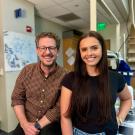
Congrats Dr. Mizenko!

Rachel Mizenko successfully defended her thesis titled, "EV heterogeneity: an essential feature for intercellular communication in health and disease and an underutilized resource in the clinic."